

Brain Function and Relationships

A fascinating article appeared on WebMD, that discusses a new study from Stony Brook University, in New York, (which I attended the first two years of my under graduate program) that examines through MRI studies whether couples can still be very much in love after spending many married years together and if they could experience the same intense romantic feelings as those couples who do when they have first fallen in love.

The scientists at Stony Brook took MRI images of long-term married couples and compared the images to couples who had recently fallen in love. By scanning the brains of married individuals who stated that they still felt very much in love with their wife/husband after over an average of 21 years together, the scientists were able to compare these images in specific parts of the brain that function and respond to love.

The way this was achieved was by showing the subject photos of the beloved as well as close friends and strangers. The brain activity was being measured while the subject was viewing the images. Then the researchers compared the imaging results that used the same scanning methods on men and women who in the past year had reported recently falling in love.
 
The scans showed “many very clear similarities between those who were in love long-term and those who had just fallen madly in love,” Arthur Aron, PhD, of Stony Brook’s department of psychology, says in a news release. He went on to also say that “the dopomine region of the brain – the ventral tegmental area “showed greater response to images of a long-term partner when compared with images of a close friend or any of the other facial images,” Aron says. Dopomine is a neurotransmitter associated with pleasure.

The researchers are hoping that the study might be able to provide or demonstrate how or why some couples can stay in love over long periods of time. It appears from this study that these MRI scans indicate in both cohort groups activity in the brain regions that are wired for reward, motivation, and desire.

Aron is looking into the possibility of using the study outcomes to assist soldiers returning from wars in Iraq and Afghanistan to save their marriages. There is an unusually high level of divorce amongst deployed US military.

With all good wishes,
Georgianna
Copyright 2011 G. Donadio

A Holistic Approach to Fibromyalgia


Fibromyalgia is a condition that millions of Americans suffer from. Translates from the Latin and Greek roots it means “pain in the fibrous muscle and connective tissues”.

The symptoms are usually chronic, intense pain in the tissues, which are highly sensitive to pressure. The sensitivity is often located throughout the body and can move and shift without any seeming rhyme or reason.

Fibromyalgia can be also accompanied with a host of other symptoms such as joint pain and difficulty with movement, fatigue and exhaustion, difficulty sleeping or getting restful sleep as well as headaches and other symptoms.

What can be frustrating for sufferers is that even after many decades of clinical research on fibromyalgia, medical experts refer to this condition as a “medically unexplained syndrome”.  

The condition is clinically defined as a history of widespread pain in the connective tissues that persist for more over 12 weeks, and which affects both sides of the body and includes above and below the waist.

The prevailing medical course of treatments offered include muscle relaxants, anti-depressants and even anti-seizure medication. The onjective of prescribing these drugs are to affect the nervous system function to reduce pain. Unfortunately, one of the side affects of these medication is that they can also produce lethargy and fatigue, creating a “dog chasing tail scenario” for the sufferer. They take medication to feet better

Holistic treatment plans have been shown to be very effective in alleviating both the pain and other realted fibromyalgia symptoms. Holistic and alternative medicine approaches incorporate medication, patient education, aerobic exercise and cognitive-behavioral therapy.

Here is how connective tissue and muscle fibers function in both normal conditions as well as in  fibromyalgia states:

For muscle movement energy is produced in each muscle cell which in turn allows the muscle fiber bundles to move. When energy is produced through the Krebs Cycle inside each cell, crystal like acids are produced as a result of this energy production.

Lactic and pyruvic acids can build up in the spaces between the muscle fibers if there is a lack of proper blood flow or if the muscles are so tensed that these by-products cannot be removed with normal circulatory function.

The more tense the muscle, the more diminished the circulation, the greater the tissue build up of these highly irritating acids. Over time, the surrounding tissues become highly inflamed and a chronic, painful syndrome is established.

Fibromyalgia is a stress-fueled condition. All options related to reducing stress and muscle tension, along with increasing circulation and relaxation are highly effective.

With all good wishes,
Georgianna

Copyright 2011 G. Donadio

Winter’s Effect on Health

For those suffering from chronic health conditions, the winter can usher in an unwelcome increase in their symptoms. Asthma, arthritis, SAD (Seasonal Adaptation Disorder), COPD (Congestive Obstructive Pulmonary Disease), extreme dry skin problems can all become part of the winter landscape.

The cold weather lowers humidity and encourages an increase in dry, itchy and scaling skin that can be unsightly as well as uncomfortable. As we do not generally sweat in the winter as we do in warmer weather, our body does not produce the natural oils and secretions necessary to keep the skin moist, smooth and healthy.

Conditions that affect the lungs, such as asthma, can be greatly affected by cold air, as the cold causes an increase in mucous secretions and the release of histamines which can lead to wheezing and the onset of an asthmatic episode. Because of the affect cold has on mucous membranes, bloody noses can also be more frequent during the cold winter months.

When the winter weather causes cold air to be processed through our nasal passages, the mucous membranes thicken. This thickening can cause blood to rush to the nose resulting in breakthrough nasal bleeding or bloody nose. Increased blood flow to the nose is also the reason we get red noses in the winter time.

For individuals who suffer from Chronic Obstructive Pulmonary Disease the winter cold can become a major challenge, as the cold air stimulates histamine which can decrease an individual’s ability to breathe properly. This can make it difficult for them to get around in the cold weather. For arthritics, as the barometric pressure drops, inflamed joints can become increasingly stiffer and more painful.

For all types of chronic conditions, it is best in the cold weather to:

  • Protect yourself from the winter elements by dressing warmly. The real risk of hypothermia or frostbite for those with chronic disease states should be considered when dressing for outdoors.
  • Schedule necessary outing to minimize cold weather exposure
  • Get enough sleep and drink enough fluids to stay hydrated and help your immune system protect you from virus based illness
  • Eat plenty of vegetables in soups, stews and other nourishing forms
  • Take a daily multi-vitamin to insure you are getting the RDA of required nutrients

    With all good wishes,
    Georgianna

    Copyright 2011 G. Donadio     

Our Pets and Our Health

A 2008 survey published by the American Veterinary Medical Association (AVMA) shows that one or more pets live in over 57 percent of U.S. households. While it is clear Americans love our pets, is it also a health benefit to care for them? “Pet ownership is good for your health both physically and psychologically,” says Connecticut psychologist Herbert Nieburg, author of “Pet Loss: A Thoughtful Guide for Adults and Children” (HarperCollins).

When asked why people are so attached to their pets they are likely to say its because of the companionship and unconditional love. This may be why research has identified numerous health benefits experienced by pet owners:

  • reduced stress
  • lower blood pressure
  • for heart attack sufferers, pets increase longevity
  • for Alzheimer’s patients pets can increase appetite
  • relax body tension
  • create purpose
  • provide security
  • create opportunity for exercise
  • increase social interaction with other pet owners
  • provides routine and purposeful care of another
  • prevent loneliness

In addition to this long list of benefits from pet ownership, one of the most important psychological benefits is that our animals cause us to focus our attention outside ourselves rather than being overly self-concerned or self-absorbed. By caring for and loving our pets, we become better people, more responsible and caring when we must commit ourselves to their needs and schedules.

Last year pet owners spent 52 billion dollars on dogs and cat alone with billions more spent on horses, birds and farm pets. Our pet can also making up for the sense of alienation many feel living in high population cities and in the intensely competitive culture we have developed over the past 25 years.

If you are thinking about getting pet, read up on the type of pet you are considering, know what their special wants and needs are, and be sure the care commitment is compatible with your lifestyle and schedule. While pets are wonderful to share our lives with, just like with starting a family they require a big commitment both emotionally and financially.

With all good wishes,
Georgianna
Copyright 2011 G. Donadio

A New Year – A New Start


“Happy New Year” is a greeting that fills us with anticipation, excitement and hope. The anticipation is for the new beginning we feel as the ball drops and we say good-bye to the past and look forward to the future. Our excitement is for the many possibilities that may lay ahead in the coming year and the hope is for a better 12 months than those that came before.

What are some simple, positive and productive actions we can take in this New Year that will support our optimistic January resolutions?

  • Start with a clean slate – cleaning and organizing your home space is one of the most positive ways to start the New Year. It has been shown in numerous studies that a clean, organized environment provides a sense of relaxation and calm and also helps us to be more productive because we are more organized and this results in a more efficient work or study outcome.
  • Commit to spending less and saving what you don’t spend – by setting a goal of saving a realistic amount of money each month and achieving that goal by spending that much less each month is an empowering and satisfying way to take more control over your finances and reinforce that you can transform your savings/spending patterns without much stress and strain.
  • Eat less processed foods and more living foods – this is not only a healthy resolution but also a cost saving one as well. We as Americans enjoy an abundant lifestyle and have the highest obesity rate in the world to prove it. By focusing on life giving plant based foods, we nourish our bodies and save a lot of money by not buying high priced processed and often non-nourishing “foods”.
  • Identify an organization, charity or cause that you can either provide a small but heartfelt donation or voluteer time to. Participating in meaningful assistance to others is rewarding on many levels and is good for our health as well as our sense of contribution.

Each New Year is an opportunity for a new beginning…and life, it is often said, is a series of new beginnings ~

With all good wishes,
Georgianna

Copyright 2011 G. Donadio All Rights Reserved
Holistic and Organic Holiday Gifts

There are folks today who prefer to receive green, natural and organic gifts over the more commerial, expensive and sometimes electronically complex ones. My family and friends now expect to receive such gifts and are actually disappointed if I don’t deliver.

In case you have a smiliar group of friends and family, here are some nice presents you can give that are not only green, and healthy but are also not expensive.

Natural gifts to consider giving this season:

  • Home baked natural or sprouted flour breads and cookies – the gluten free variety is so popular that baking a tin of delicious non-allergic cookies or cakes will make you someones favorite Santa.
  • Handmade Quilts – talk about one of the best handmade gifts to receive and a quilt is high on the list. Quilts are so popular that they are used for raffles at fundraisers and bring in huge piles of raffle revenue. Most handmade quilts also sell for hundreds if not thousand of dollars.
  • Live herb plants – wonderful for growing on window sills and to use in cooking. Aloe Vera is a great plant to keep on hand for any kinds of burns or skin irritations. Simply break off a leaf and rub the healing liquid from the leaf on the burn or irritation.
  • Teas, Tea Pots and all thing related to this welcomed and health-filled brew – a wide variety of healing, soothing and delicious herb teas, in beautiful gift baskets can be found in health food and general grocery stores in the produce section.
  • Coffee grinders – this is a truly coveted gift for the coffee lover. Add a pound of organic free trade coffee to make it the perfect gift.
  • Herbal Candles – everyone enjoys the glow and aroma of a herbal or aromomatic candle. They are beautiful, healthy and sensual.
  • Natural facial or massage gift certificate – treat that hard working friend or relative to a full body or facila massge. With so many natural herbs and wraps to choose from they will want to make a day of it.
  • Pedometer – this handy device can let the user know just how far they have walked through the course of their day or exercise period to assist them in staying on top of their fitness.
  • Wellness baskets with nuts, dried fruits, tea, honey, dark chocolates, mustard, spices or salsa, fruits, veggies drinks and anything else you can imagine make beautiful and festive gifts as well. 

Giving the gifts of health can be as fulfilling as receiving them, so think outside the box this season and surprise friends and family with these helpful and healthful presents.

With all good wishes,
Georgianna
Copyright 2010 G. Donadio

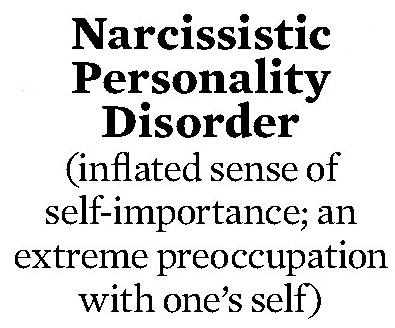
Narcissism – is it the New Normal?


The subject of Narcissism and its current epidemic in our self-celebrated society is getting plenty of press and finding it way into numerous books.  Drs. Jean Twenge and W. Keith Campbell wrote in their book, “The Narcissism Epidemic,”:

“Personality does not exist in isolation.  The increase of narcissism in individuals is, we believe, just an outcome of a massive shift in culture toward a greater focus on self-admiration.  Narcissism has spread through the generations”.

A recent article published in the December 19th Huffing ton Post also deserves reading on the subject, so here it is in its entirety.

Narcissism – the New Normal
The Huffington Post
December 19, 2010
by Judith Acosta, LISW, CHT

The other day a patient sent me an email with a link to a New York Times article that reported that the upcoming revision of the psychiatric diagnostic standards manual, the DSM-V, has removed the narcissistic personality disorder from its roster.

She asked me, “Are they crazy?”

I wrote back, “I think so.” Then, I thought, maybe the lunatics really are running the asylum.

“Removed” in this case appears to mean two things: 1) that the syndrome as they have hitherto described it is not, in their opinions, clear enough to be described as a character pathology; and 2) that it will no longer be an acceptable diagnosis for reimbursement. Insurance companies, hospitals, treatment facilities and protocols will no longer recognize it or use it to direct treatment.

Should that give us hope or terrify us? Does that mean narcissism is slowly going the way of the Dodo, or does it mean that it has become so pervasive that it’s no longer thought of as pathological?

My experience personally and professionally has me leaning in the direction of the latter, that it has become so much a part of our culture, particularly our parenting, that narcissistic traits are considered normal — so much so that if we don’t have a reality show named after us, we use our own phones or video up-links to transmit our private lives to anyone from Alaska to Antarctica who will watch.

Our culture, the media-infused air we breathe, has itself become both a breeding ground and a reflecting pool for narcissists.
—————————————————————————
Makes you think about how we all got to be so self-centered, doesn’t it?

With all good wishes,
Georgianna

Religious Service Attendance Strengthens Immune System


 A study at Duke University Medical Center found that older people who attended religious services at least once a week were about half as likely as those who do not attend services weekly to have elevated levels of interleukin-6 (IL-6).

This measure is a protein that indicates the presence of inflammation in the body. Inflammation has been implicated in most major chronic disease states, including heart disease, cancer, diabetes and Parkinson’s disease. This decreased level of IL-6 translates into a healthier immune system enjoyed by the those with regular attendance at their religious community.

The researchers factored into the study outcomes health conditions experienced by the study subjects. These included depression, chronic illness, and negative life events—all of which the researchers identified as likely to affect immune status.  Even with these conditions, the improvement to the immune system in those who attended services weekly, was evidenced.

These findings identified that religion or participation in a spiritual life community may affect immune function through better coping skills, psychosocial factors, and the mechanisms by which organized religion promotes positive thoughts and behaviors.

There may also be other factors at play as well. Feelings of belonging to a community, shared values, as well as the togetherness of worshiping with others may be at the cause and effect of these findings.

These positive feelings appear to counteract stress and provide a positive effect on the mind/body communication, which has been demonstrated in clinical studies to have a persistent affect on the immune function of individuals with a positive outlook and upbeat attitude as a way of dealing with stressful situations.

This study also raises the inquiry that there may be a factor of loneliness, experienced by older Americans to a larger extend than do younger populations, that may be part of the healing effect of the weekly spiritual community attendance.

With all good wishes,
Georgianna

Copyright 2010 G. Donadio

What Your Sleep Position Says About You

In a BBC report on research linking certain sleeping positions with health risks, British scientists think the sleeping position of an individual provides clues to the true personality of the sleeper as well as revealing health clues.

Professor Chris Idzikowski, director of the Sleep Assessment and Advisory Service analysed six common sleeping positions and believes they are each is linked to a specific personality types. “We are all aware of our body language when we are awake but this is the first time we have been able to see what our subconscious posture says about us” says Professor Idzikowski.

The sleep study identified that most people are unlikely to change their sleeping position during the night. Only 5% of the study participants reported to sleep in a different position on different evenings. Another interesting reveal of the study was that only one in ten individuals cover themselves completely with a blanket. Most people expose a leg, arm or both feet.

Professor Idzikowski also examined the effect of various sleeping positions on health. Some positions are believed to help aid digestion, while other positions are believed to promote snoring and restlessness.

Here are the six common positions, studied by Professor Idzikowski, that his study participants expressed. The study’s findings also related the positions to personality traits and health implications.

  • Fetus position – A majority (41%) of the study participants, with 200% more female than male, sleep in this curled-up position. The personality appointed to this sleeping position is that the sleeper has a tough exterior,  but are shy and sensitive and warm up quickly.
  • Log position – This study identified that 15% of people sleep in this position. Sleeping on your side with both arms down, says that you are a social, easy-going person who is trusting and possibly gullible.
  • Yearner position– The third most popular position, utilized by 13% of the participants, is the side-lying position with both arms out in front of the body. This position is considered to be open-minded and yet cynical. They can be suspicious and stubborn. This position is called “the yearner” position.
  • Soldier position – 8% of the sleepers in this study lie on their back with arms down and close to the body. This position is considered to be that of people who are reserved, quiet, not fussy and hold themselves and others to a high standard. This position has a higher rate of snoring due to the back position.
  • Free fall position – Only 7% of the sleepers lie on their bellies with arms under or wrapped around a pillow  and their head turned to the side. Considered brash, outgoing, and uncomfortable with criticism.
  • Starfish position – Those who lie on their backs with arms near their head or pillow make up the smallest  style of sleepers, with only 5% utilizing this position. Considered good listeners, helpful, and  uncomfortable being the center of attention. Sleeping in the starfish position are likely to suffer from a poor night’s sleep due to snoring.

With all good wishes for a great night’s sleep,
Georgianna

A Stimulating Look at Energy Drinks

They are the new retail craze, available everywhere and promising instant  energy to get more done faster. The largest population they are pitched to is the “under 30” group. This includes high school and college students, as well as athletes both school age and professional.

Our over worked culture is moving beyond coffee for its morning wake up and afternoon pick–me-up to the energy drink solution. This popular product comes with it’s own health concerns. Energy drinks contain significant amounts of caffeine and sugar and can include other stimulants such as ephedrine, guarana, and ginseng, which all have been shown to have potential health concerns. Here are some points of consideration you may want to be aware of before gulping down a can or two of the elixir:

  • Energy drinks contain as much caffeine as in a cup of coffee. Consumed quickly as energy drinks are, the caffeine and sugar provide a jolt of energy by stimulating your stress system, but also raise your blood sugar and blood pressure levels, causing your heart to beat faster and work harder.
  • The contents of these energy drinks can produce symptoms that may include anxiety, insomnia, irritability and nausea that can be severe enough to require medical attention or hospitalization.
  • Energy drinks, if taken during exercise, can dehydrate the body and deplete much needed calcium and potassium.
  • Because of the energy provided by the caffeine and sugar in energy drinks, they have become popular as mixers with alcohol. This can lead to an individual not being aware of the level of intoxication, which might allow them to drive under the influence.
  • Bad reactions to energy drinks have been reported to U.S. poison control centers published in the journal Drug and Alcohol Dependence.
  • In a report of nine cases of adverse reactions to the energy drink Redline, the patients reported nausea and vomiting, high blood pressure, tremors, dizziness and numbness.
  • There is the impression that because these drinks are available over the counter and can be bought in any retail store, they are not a “substance” that we should use carefully.
  • While energy drinks can be part of a balanced lifestyle when consumed sensibly, as with all things related to health and lifestyle, we need to exercise moderation and good judgement to avoid problems that can arise from inappropriate or excessive use.

With all good wishes,
Georgianna

Copyright 2010 G. Donadio