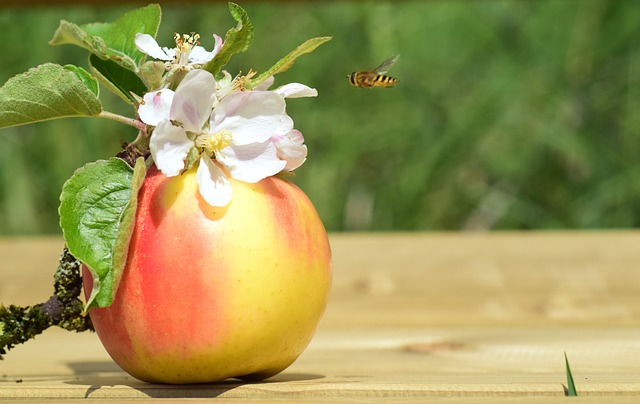
 During the summer my apple trees, with their sweet droppings all about the orchard, produce an enormous population of fruit flies. Apart from being occasionally annoying and making a bit of noise, they would not be a topic to capture one’s attention. At least I never thought so, until I read a fascinating study about fruit flies that indicated our gender may be largely connected to our genes.
Geneticist Barry Dickson and graduate student Ebru Demir, of the Institute of Molecular Biotechnology of the Austrian Academy of Sciences in Vienna, Austria made a small change to a genetically altered gene that they engineered into female fruit flies. This very specific gene alteration that was integrated into the female flies would always produce male fruit fly protein.
The genetically altered female fruit flies behaved like amorous male flies – perusing other female fruit flies and wooing them with the species elaborate courtship display. This gene altering and its subsequent behavioral results were reported in the scientific professional journal Cell.
The engineered females rejected males that tried to mate with them and began to imitate the multi-step male courting dance which is truly fascinating but a bit too racy to describe in this article. I am not kidding! The two scientists hypothesize that the altered genes set into motion a cascade of genetic changes to re-program the female fruit flies sexual behavior.
One of the most spell binding books I have ever read about behavior and genetics is Melvin Konner’s brilliant and stunning book, The Tangled Wing. His book is about humans and not fruit flies.
It is also an amazing book to read to better understand the wide range of “masculinity” and “feminine” behavior that exits in men and women. When we explore the science of how our brains function through our biochemistry and how this biochemistry is in control of the actions and behaviors it helps us to be more understanding and compassionate about ourselves and others.
The renowned behaviorist, B.F. Skinner, stated many decades ago that our hormones were the most powerful movers of how we lived our lives. More recently, Candyce Pert, PhD, author of Molecules of Emotions, has done the research that demonstrates exactly how the brain’s neuropeptides achieve our behavior outcomes.
For those interested in the subject of behavior and brain function, Melvin Konner’s and Candyce Pert’s work is highly recommended. For a free download of the bestselling, award winning behavior change book, Changing Behavior, visit www.changingbehavior.org.
Reference: www.wholehealtheducation.com
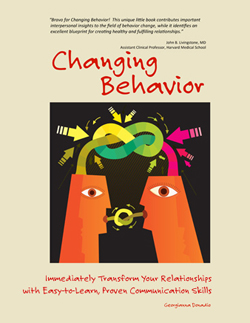
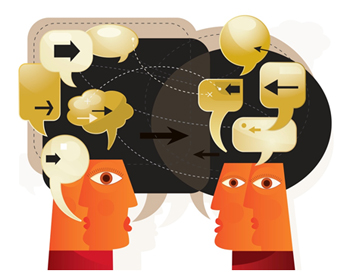 This self-help book focuses on how to transform all types of relationships with hospital-tested, proven communication skills that enhance and improve all relationships, even those that are suffering and struggling. Donadio presents the research with an easy-to-read and understand style that allows the reader to walk away armed with new skills and tools to create a happier, healthier life through more fulfilling relationships.




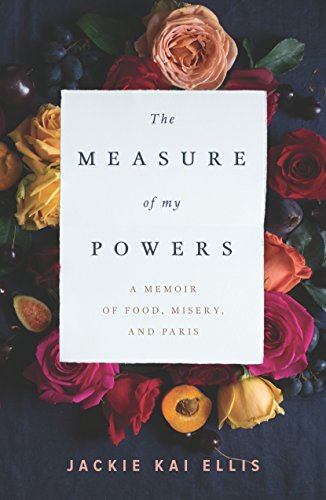
 My guest is a woman who has journeyed through the darkness of a painful childhood and empty marriage, to discover her true self, her beauty and her passion through the world of food– Food, apart from its actual function, can also be a metaphor for the nourishment we all need in life. A successful designer with her own studio, Jackie Kai Ellis, had accomplished what everyone told her she needed to be happy and fulfilled, yet each morning she would wake up dreading the day ahead. She had “the perfect life” – yet she was struggling to solve the problems within her marriage and looking to escape the ongoing depression which hung like a cloud over her days. Jackie’s love of cooking and baking led her to the only place where she found peace and comfort, in her kitchen.